Plan legal-dimension Canada–U.S. open-deck freight with equipment compatibility, shipment documents, broker communication and border timing in view.

Flatbed freight at a customs inspection facility
- Shipper / importer: provide and confirm commercial invoice and shipment information with their appointed customs broker.
- Carrier: coordinate transport documents, manifest references and arrival milestones.
- Appointed customs broker / border: the broker handles the customer's customs entry responsibilities; customs authorities decide release. OTR coordinates transportation communication, not customs brokerage.
- Receiver: confirm receiving appointments and notify the transportation parties of changes.
Reference photograph at a Seattle port of entry, not a depiction of a Canada–U.S. land crossing or an OTR shipment. Customs authorities decide release; inspection does not guarantee clearance.
Photo: Donna Burton / U.S. Customs and Border Protection · Public domain; CBP source credit · Resized/compressed; display crop may vary. No endorsement implied.
In This Guide
What It Means
Legal-dimension, legal-weight open-deck freight still requires shipment-specific equipment and route confirmation on both sides of the border. Canadian and U.S. requirements may differ; this guide is transportation planning, not legal or customs advice.
Why It Matters
OTR coordinates legal-dimension and legal-weight flatbed and open-deck freight only. OTR does not arrange oversized, overweight or permit-required shipments.
How It Works
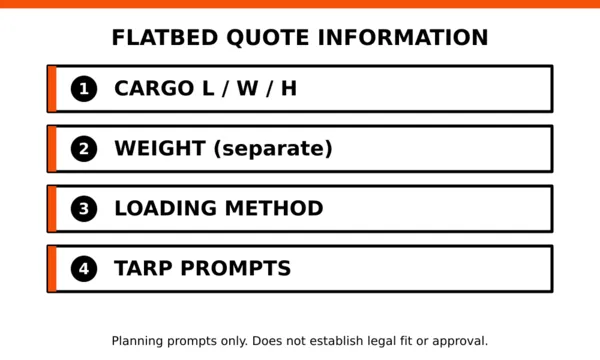
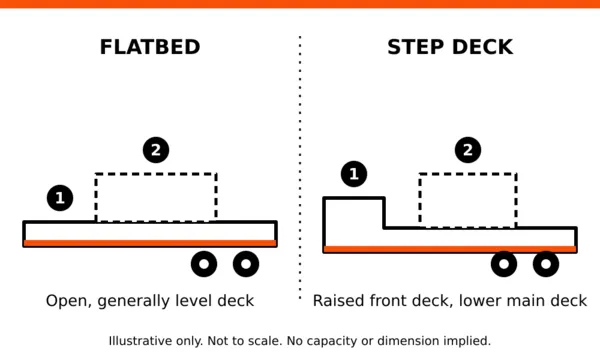
- Confirm equipment compatibility, cargo dimensions and weight, loading and unloading methods, pickup and delivery appointments and site access.
- Conestoga and Rolltite requests require confirmation of shipment suitability, internal clearance, loading access and carrier availability for the Canada–U.S. lane.
- Coordinate a commercial invoice and accurate shipment documents with the customer’s appointed customs broker. The shipper and importer supply and confirm customs information.
- Include PARS/PAPS milestones and carrier/broker reference handoffs in the transport plan. These milestones do not mean customs release or guarantee clearance.
- Allow for border timing, crossing availability, appointments and carrier updates. Customs authorities decide release.
Common Challenges
Incomplete invoice data, mismatched references or border delays can affect a receiving window. Keep the shipper, carrier and appointed customs broker informed of changes.
Best Practices
OTR coordinates transportation communication with the appointed customs broker. OTR does not provide customs brokerage and does not arrange permit-required freight. Confirm commodity-specific requirements with the appropriate authority or adviser.
When to Use This Service
Planning references are not an engineered securement design, legal advice, approval or a release determination. The motor carrier and driver remain responsible for final cargo securement and regulatory compliance.
Plan compatible open-deck capacity using complete shipment details.
Related freight pages
Explore services and local freight-broker pages that fit this topic.