Prepare a flatbed quote request with dimensions, weight, loading methods, tarps, appointments and site details using a copyable shipment checklist.
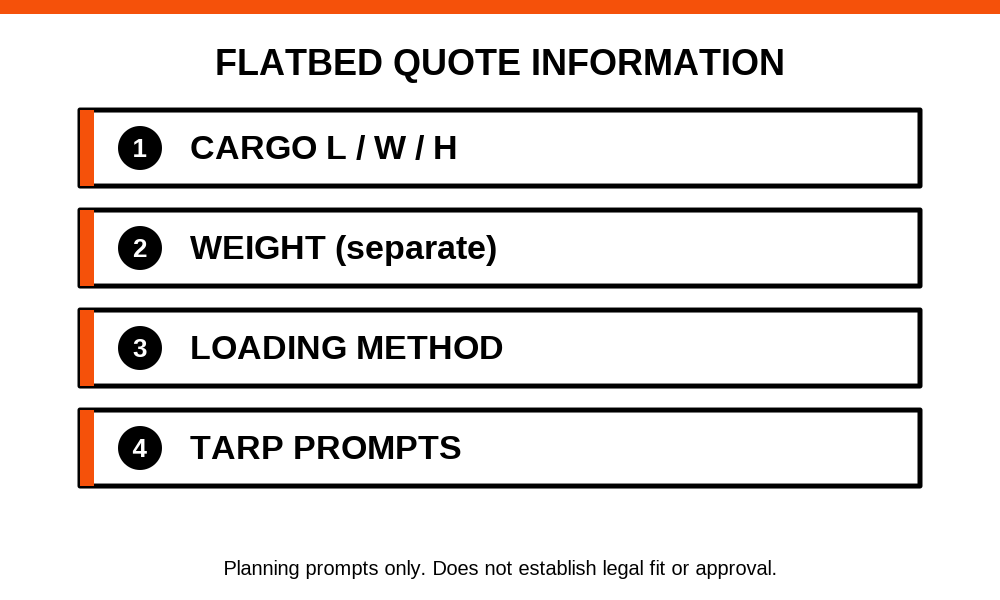
Cargo information for a flatbed quote
- 1. Length, width and height: measure the prepared cargo, including its skid or crate, and give units.
- 2. Weight: provide verified cargo and packaging weight with units.
- 3. Loading method: identify loading and unloading equipment, access and site arrangements.
- 4. Tarp requirements: identify requested coverage and sensitive surfaces; confirm capability before carrier assignment.
Planning prompts only, not proof of legal fit or an approved securement design.
In This Guide
What It Means
A usable quote request identifies the cargo, lane and handling requirements before a trailer is selected. Estimates or missing dimensions can delay equipment selection or require the quote to be revisited.
Why It Matters
OTR coordinates legal-dimension and legal-weight flatbed and open-deck freight only. OTR does not arrange oversized, overweight or permit-required shipments.
How It Works
- Origin and destination, including postal/ZIP codes
- Pickup date and delivery timing
- Commodity and number of pieces or bundles
- Verified total weight and units
- Each piece’s length, width and height, including packaging, with units
- Loading method and available equipment
- Unloading method and available equipment
- Tarp requirements, weather-sensitive surfaces and any Conestoga or Rolltite preference
- Pickup and delivery site-access restrictions
- Appointment requirements and site contacts
- Cross-border details, commercial invoice and appointed customs broker when applicable
Common Challenges
“One machine” or an estimated weight is not enough to confirm a trailer. Measure the packaged cargo and obtain reliable weight information; identify anything still awaiting confirmation.
Best Practices
Use the copyable checklist below to gather the information from the shipping and receiving teams. Include the appointed customs broker and shipment documents for Canada–U.S. moves. OTR can arrange Conestoga and Rolltite rolling-tarp equipment for legal-dimension, legal-weight freight, subject to shipment suitability and carrier availability. Confirm internal clearance, loading access and weather-protection requirements before booking; rolling-tarp systems do not guarantee protection against every condition.
When to Use This Service
Planning references are not an engineered securement design, legal advice, approval or a release determination. The motor carrier and driver remain responsible for final cargo securement and regulatory compliance.
Plan compatible open-deck capacity using complete shipment details.
Flatbed quote-information checklist
- Origin and destination, including postal/ZIP codes
- Pickup date and delivery timing
- Commodity and number of pieces or bundles
- Verified total weight and units
- Each piece’s length, width and height, including packaging, with units
- Loading method and available equipment
- Unloading method and available equipment
- Tarp requirements, weather-sensitive surfaces and any Conestoga or Rolltite preference
- Pickup and delivery site-access restrictions
- Appointment requirements and site contacts
- Cross-border details, commercial invoice and appointed customs broker when applicable
Related freight pages
Explore services and local freight-broker pages that fit this topic.
Related Guides
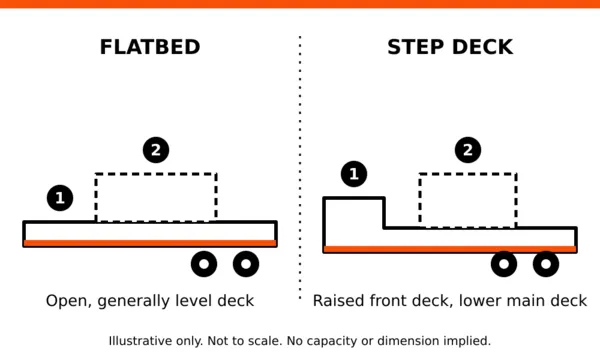
Flatbed vs. Step Deck: Which Trailer Does Your Freight Need?
4 min read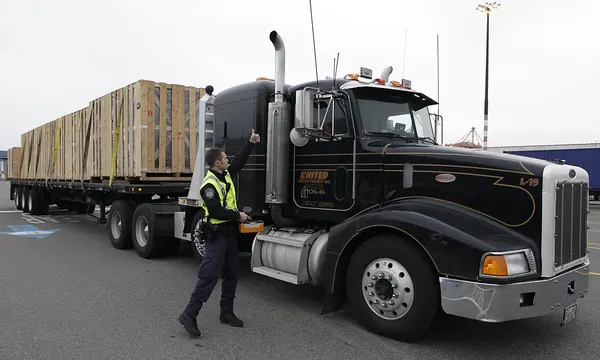
Photo: Donna Burton / U.S. Customs and Border Protection · Public domain; CBP source credit · Resized/cropped.